Europe
Austria travel guide
Local essentials, places to discover and healthcare information for your journey.
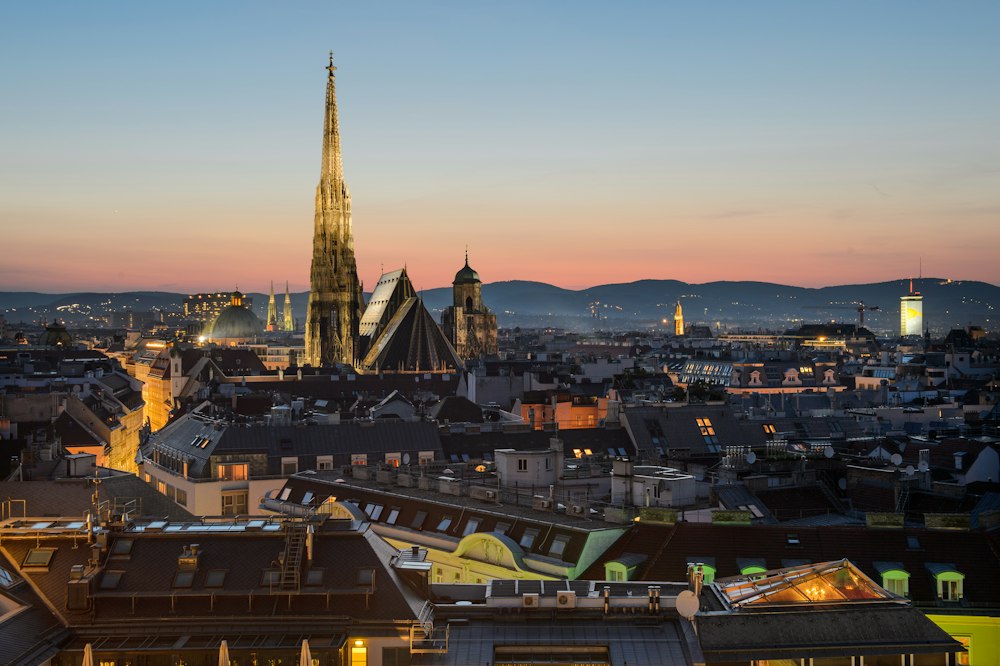
Club reference information, not live advice. No verified review date is recorded for this destination. Entry rules, costs and services can change. Confirm requirements with official immigration, embassy and local service sources before travelling.
Local essentials
- Language
- German
- Currency
- Euro
- Time zone
- UTC+1 (CET), UTC+2 (CEST Mar-Oct)
- Getting around
- Vienna has excellent U-Bahn, trams and buses. ÖBB rail connects all major cities. Salzburg and Innsbruck have good bus/tram networks.
- Arrival
- Vienna: CAT train to Wien Mitte 16 min. S-Bahn 25 min.
- Payments
- Austria is more cash-oriented than neighbours. Many restaurants and cafés prefer cash. Always carry €50+. Larger shops accept cards.
- Power plugs
- Type C / Type F
Places to discover
- Attend a classical concert in Vienna's Musikverein or State Opera
- Ski the Austrian Alps in Innsbruck, St. Anton, or Kitzbuhel
- Explore Salzburg's old town and Sound of Music filming locations
- Visit the Schonbrunn Palace and its magnificent gardens
- Hike the Austrian Alps in summer with alpine hut overnights
Entry and travel documents
Requirements depend on nationality, passport, residence and transit stops. Check the destination's official immigration or embassy advice. The items below are existing club preparation notes, not a confirmed entry checklist.
- EHIC/GHIC card (EU/EEA visitors - covers care at Kassenarzt/e-card rates)
- Comprehensive travel insurance (essential for non-EU, highly recommended for Alpine activities)
- Mountain rescue insurance or ÖAV/Alpenverein membership (if hiking/skiing)
- Schengen attestation for controlled medications
- Doctor's letter for all prescription medications
- Passport and relevant visa documentation
- e-card (for residents - also serves as Sozialversicherungsausweis)
Healthcare and emergency contacts
Emergency numbers: 144 / 112 / 140
Call 144 (Rettung - ambulance) or 112 (EU general emergency). Mountain rescue: 140 (Bergrettung). ÖAMTC emergency: 120. All lines have English speakers. Major hospitals: AKH Wien (Vienna General Hospital - one of Europe's largest), LKH Graz, KH Kepler Linz, LKH Salzburg, LKH Innsbruck. ER wait times: 1-3 hours for non-critical in Vienna (longer in winter flu season). Mountain emergencies: ÖAMTC Christophorus helicopter fleet (14 bases) provides rapid response across the Alps.
Austria operates one of Europe's best healthcare systems - a Bismarckian social insurance model reformed in 2019 when all employees' health funds were merged into the single Österreichische Gesundheitskasse (ÖGK). The e-card (electronic insurance card) is your key to the system - residents present it at any contracted practice for cashless care. The system distinguishes between Kassenärzte (contracted doctors - free/heavily subsidised for insured patients) and Wahlärzte (private choice doctors - paid upfront, partial reimbursement possible). Hospital care is delivered through public Landeskrankenhäuser (state hospitals) of excellent quality. Austria's unique challenge is the Alpine geography: rural mountain communities and ski resorts can be far from hospital care, but the Bergrettung Österreich (Mountain Rescue Austria) and ÖAMTC/ADAC air rescue services are outstanding. TBE (tick-borne encephalitis) is a significant and underappreciated health risk - Austria has one of Europe's highest TBE incidence rates, and most Austrians are vaccinated. Dental care is partially covered for residents but notably expensive for visitors. Mental health services are integrated but have waiting list pressures. Vienna, Graz, Linz, Salzburg, and Innsbruck all have excellent university hospitals (Universitätsklinik) providing specialist tertiary care.
Seeing a Doctor
Two-tier system: Kassenarzt (Vertragsar) - contracted doctors free/subsidised for e-card/EHIC holders, walk-in or appointment. Wahlarzt - private choice doctors, pay upfront (€60-150), claim partial reimbursement from ÖGK afterwards. Bereitschaftsdienst (out-of-hours GP service) operates evenings, nights, weekends.
Recorded cost reference: Kassenarzt: free with e-card or EHIC (€0 for EU visitors). Wahlarzt: €60-150 upfront, partial ÖGK reimbursement of ~80% possible. Specialist (Facharzt): free via referral at contracted practices, €80-250 at private. Out-of-hours GP service (Bereitschaftsdienst): free for EHIC holders.
Pharmacies and medication
Residents pay €7.15 prescription fee (Rezeptgebühr) per item regardless of cost - exemptions for low income, chronic conditions. Visitors pay full undiscounted price. Austrian pharmacies are well-stocked and expensive for uninsured visitors - paracetamol 20 tabs: ~€3-5, branded ibuprofen: €5-10. Most medications require prescription.
Practical tips
- EU visitors: bring your EHIC - Kassenarzt visits are completely free, which is exceptional value
- Get TBE vaccination before visiting - rapid 3-dose schedule (0, 7, 21 days) available. FSME-Immun and Encepur available at all Austrian pharmacies
- Buy ÖAV (Österreichischer Alpenverein) membership (€65-80/year) before hiking or skiing - includes mountain rescue insurance worth thousands
- Nachtapotheke: every pharmacy door lists the nearest 24/7 duty pharmacy, or search nachtapotheke.at
- For non-emergency urgent care evenings/weekends: Bereitschaftsdienst (1450 - health advice line) or nearest ärztlicher Bereitschaftsdienst
- Österreichische Gesundheitskasse (ÖGK) website lists all contracted Kassenarzt by specialty and location - check before selecting a doctor
- Call 1450 (Gesundheitstelefon) for health advice - English available, free, 24/7
- Apotheke (green cross) - pharmacists are excellent first-stop advisers for minor ailments and minor prescription needs
Source references
These are source names recorded in the existing profile, not independently checked links or proof of a recent review.
- Österreichische Gesundheitskasse (ÖGK)
- Austrian Federal Ministry of Social Affairs, Health, Care and Consumer Protection
- Bergrettung Österreich (Mountain Rescue Austria)
- ÖAMTC
- CDC Travelers Health Austria 2025
- UK FCDO Travel Advice Austria
- FSME Info Austria (TBE information)