Americas
Brazil travel guide
Local essentials, places to discover and healthcare information for your journey.
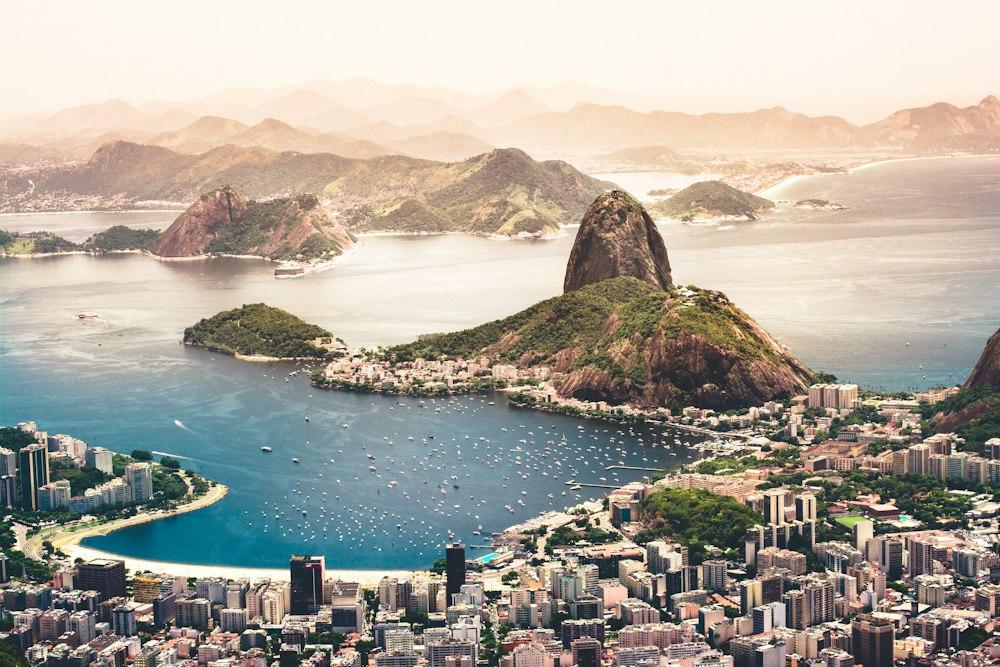
Club reference information, not live advice. No verified review date is recorded for this destination. Entry rules, costs and services can change. Confirm requirements with official immigration, embassy and local service sources before travelling.
Local essentials
- Language
- Portuguese
- Currency
- Brazilian Real
- Time zone
- UTC-3 to UTC-5 (multiple time zones)
Places to discover
- Experience Carnival in Rio de Janeiro or Salvador
- Visit Iguazu Falls, one of the world's most spectacular waterfalls
- Explore the Amazon rainforest on a guided river expedition
- Relax on the beaches of Copacabana, Ipanema, or Fernando de Noronha
- Try Brazilian churrasco (BBQ), acai bowls, and street-side coxinhas
Entry and travel documents
Requirements depend on nationality, passport, residence and transit stops. Check the destination's official immigration or embassy advice. The items below are existing club preparation notes, not a confirmed entry checklist.
- Travel insurance with medical repatriation (strongly recommended despite free SUS access - private care is much better)
- Passport (CPF/tax number helpful for some registrations)
- Yellow fever vaccination certificate (ICV - International Certificate of Vaccination)
- Doctor's letter for controlled medications (in Portuguese if possible - have it translated)
- Copies of prescriptions with generic (INN) drug names
- Insurance policy details for private hospital access
- Basic Portuguese medical vocabulary list or translation app
Healthcare and emergency contacts
Emergency numbers: 192 (SAMU ambulance) / 193 (Bombeiros/fire rescue) / 190 (police)
Call 192 for SAMU ambulance (free, government-operated) or 193 for fire/rescue. SUS guarantees free emergency care for EVERYONE including tourists - no documentation required, though having ID helps. UPAs (Unidades de Pronto Atendimento - urgent care units) handle less critical emergencies and have shorter waits than full hospital ERs. For serious emergencies in major cities, go directly to a private hospital if you have insurance - care is dramatically faster. Major private ERs: Hospital Albert Einstein, Hospital Sírio-Libanês (São Paulo), Hospital Copa Star (Rio).
Brazil's SUS (Sistema Único de Saúde) is one of the world's largest universal public healthcare systems - constitutionally guaranteed free healthcare for everyone, including tourists. In theory, any person can walk into a public facility and receive free care. In practice, the system is severely overstretched: real-world ER waits of 6-12+ hours are common in public hospitals (and can exceed 24 hours during peak periods or dengue outbreaks), with chronic underfunding, staff shortages, and enormous regional inequality. The southeast (São Paulo, Rio, Minas Gerais) has far better infrastructure than the north and northeast. About 25% of Brazilians have private health plans (planos de saúde), which offer dramatically faster access. Private hospitals in São Paulo (Hospital Albert Einstein, Hospital Sírio-Libanês) are genuinely world-class - ranked among the best in Latin America. For visitors, the language barrier is the single biggest challenge: English is extremely rare in healthcare settings, even at major hospitals. Portuguese is essential. The Farmácia Popular programme provides subsidised or free essential medications at participating pharmacies.
Seeing a Doctor
UBS (Unidades Básicas de Saúde - public health units) available to all but primarily serve registered local residents via ESF (Estratégia Saúde da Família - Family Health Strategy). Visitors are better served by private clinics (consultórios) or UPAs for urgent issues. No referral needed for private clinics.
Recorded cost reference: Public SUS: free. Private GP consultation: R$200-600 ($40-120). São Paulo/Rio specialists: R$400-1,000+ ($80-200+). Platforms like Doctoralia allow online booking and teleconsultation.
Pharmacies and medication
Generic medications (genéricos) very affordable at popular pharmacy chains. Farmácia Popular programme provides essential medications free or heavily subsidised (blood pressure, diabetes, asthma) at participating pharmacies - available to anyone with a prescription and CPF. Brand-name drugs more expensive. Pharmacy chains: Drogasil, Droga Raia, Pacheco, Pague Menos are reliable and widespread.
Practical tips
- Use private hospitals if insured - Hospital Albert Einstein and Sírio-Libanês (São Paulo) are world-class; Hospital Copa Star and Samaritano (Rio) are excellent
- Download Google Translate with Portuguese offline pack - this is ESSENTIAL for any healthcare interaction
- UPAs (urgent care units) have shorter waits than full hospital ERs - use for non-life-threatening issues
- Yellow fever vaccine is FREE at public health posts (postos de saúde) - get vaccinated at least 10 days before visiting Amazon/Cerrado regions
- Use DEET insect repellent DAILY - dengue is a serious year-round risk throughout Brazil, including cities
- Farmácia Popular programme provides free/cheap essential medications - ask at Drogasil or Pacheco counters
- Doctoralia app/website allows booking private doctors and teleconsultations - some doctors speak English
- Carry a Portuguese medical phrase card or use the offline translation app - "Estou com dor" (I'm in pain), "Preciso de um médico" (I need a doctor), "Sou alérgico a..." (I'm allergic to...)
Source references
These are source names recorded in the existing profile, not independently checked links or proof of a recent review.
- Brazilian Ministry of Health
- WHO Brazil
- OECD Health Statistics 2024
- ANVISA (National Health Surveillance Agency)
- CDC Travelers Health Brazil 2025
- Hospital Albert Einstein Annual Report