Asia
Singapore travel guide
Local essentials, places to discover and healthcare information for your journey.
Club reference information, not live advice. No verified review date is recorded for this destination. Entry rules, costs and services can change. Confirm requirements with official immigration, embassy and local service sources before travelling.
Local essentials
- Language
- English
- Currency
- Singapore Dollar
- Time zone
- UTC+8 (SGT)
Places to discover
- Eat at the world-famous hawker centres (Maxwell, Lau Pa Sat)
- Explore Gardens by the Bay and the Supertree Grove light show
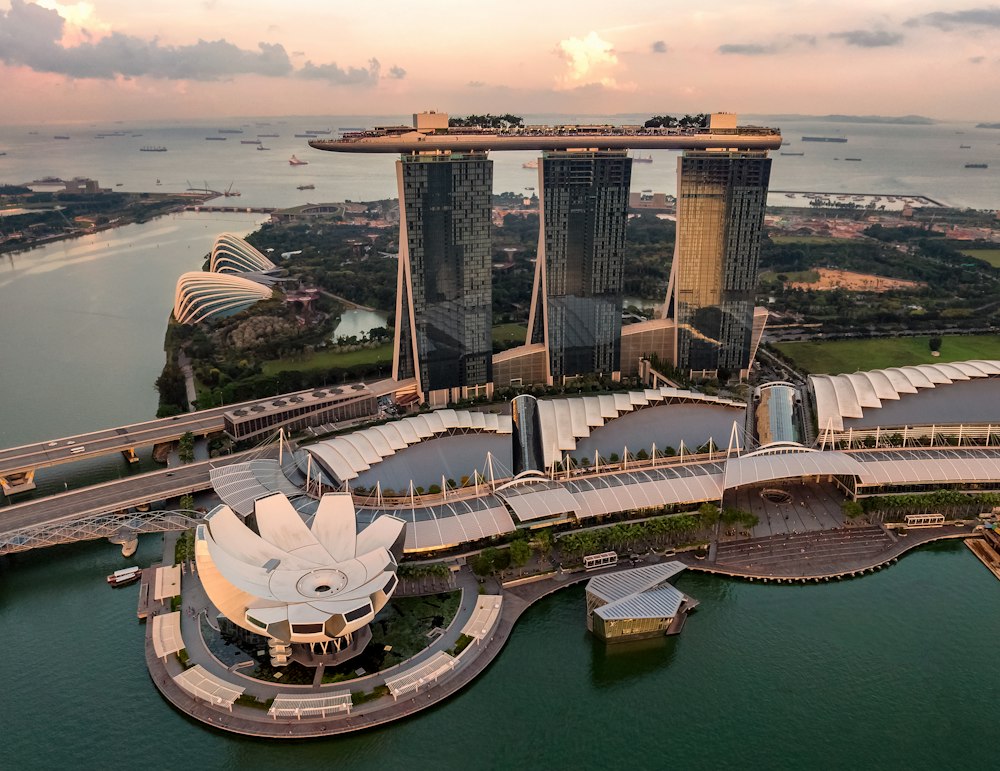
- Visit Marina Bay Sands and the ArtScience Museum
- Discover the cultural neighbourhoods: Chinatown, Little India, Kampong Glam
- Take a day trip to Sentosa Island or Pulau Ubin for nature
Entry and travel documents
Requirements depend on nationality, passport, residence and transit stops. Check the destination's official immigration or embassy advice. The items below are existing club preparation notes, not a confirmed entry checklist.
- Travel insurance with medical cover (essential - hospital costs are high for uninsured visitors)
- Passport with valid visa or visa-free entry
- HSA medication import approval for controlled substances (apply BEFORE travel)
- Doctor's letter listing all medications with generic names and doses
- Insurance policy/card for quick access at clinics and hospitals
- Medical exam results (for work pass holders - within 2 weeks of arrival)
- SG Arrival Card (electronic - complete within 3 days before arrival)
Healthcare and emergency contacts
Emergency numbers: 995 (ambulance/fire) / 999 (police)
Call 995 for ambulance (free SCDF service). Public hospitals with 24/7 A&E: Singapore General Hospital (SGH), National University Hospital (NUH), Tan Tock Seng Hospital (TTSH), Changi General Hospital (CGH), Khoo Teck Puat Hospital (KTPH). A&E uses PAC (Patient Acuity Category) triage: P1 (critical), P2 (major), P3 (minor), P4 (non-emergency). P3/P4 patients may wait 2-4+ hours. For non-emergencies, use GP clinics or polyclinics instead.
Singapore consistently ranks among the world's best healthcare systems - Bloomberg ranked it #1 for healthcare efficiency. The system is built on personal responsibility: citizens contribute to MediSave (compulsory medical savings from salary) and are covered by MediShield Life (catastrophic illness insurance). Government subsidies reduce public hospital costs for citizens (up to 80% subsidy in Class C wards). However, visitors receive NO subsidies and pay full unsubsidised rates, which can be very expensive - especially at private hospitals (Mount Elizabeth, Gleneagles, Raffles). Public hospitals (SGH, NUH, TTSH) offer excellent care at lower (but still significant) costs for foreigners. Singapore excels in complex specialties: oncology, cardiology, orthopaedics, and fertility treatments. English is the primary language of medicine - all doctors trained in English. GP clinics are ubiquitous - there's literally a clinic on almost every block in residential areas.
Seeing a Doctor
Walk into any GP clinic - no registration, no referral needed. GP clinics are on virtually every block in residential areas and in all shopping malls. Polyclinics (government-run primary care) are cheaper but subsidised rates only for citizens/PRs. Private GP clinics are the best option for visitors.
Recorded cost reference: GP clinic: SGD 20-50 ($15-37) for consultation + basic medication. After-hours/weekend GP: SGD 50-100+. Polyclinic (unsubsidised for foreigners): SGD 50-80. Private specialist: SGD 150-400+ ($110-300+).
Pharmacies and medication
Medications dispensed at the clinic/hospital (not separate pharmacies like some countries). Costs moderate - generics available and encouraged. Government hospitals use formulary-based pricing. Private clinics include basic medication in consultation fee. Chronic disease medications may need specialist prescription renewal. Singapore does NOT accept foreign prescriptions.
Practical tips
- GP clinics are the most cost-effective option for minor issues - walk in, wait under 15 minutes, SGD 20-50 all-in
- Apply to HSA for controlled medication import approval WELL before travel (2-3 weeks processing) - hsahelp@hsa.gov.sg
- For after-hours care, Raffles Medical has 24-hour clinics at several locations including Raffles Hospital and Holland Village
- Download the HealthHub app (by MOH) - find clinics, view health records (for residents), and check subsidies
- Use DEET-based insect repellent - dengue is a serious risk in Singapore, not just a rural concern
- Public hospitals (SGH, NUH, TTSH) offer excellent care at lower cost than private - choose "Standard" or "Class B" wards
- Mount Elizabeth, Gleneagles, and Raffles Hospital are the top private options - all fully English-speaking with international patient services
- Keep SGD 200-500 in cash for GP visits - smaller clinics may not accept cards (larger ones and hospitals do)
Source references
These are source names recorded in the existing profile, not independently checked links or proof of a recent review.
- Singapore Ministry of Health (MOH)
- Health Sciences Authority (HSA)
- WHO Singapore
- CDC Travelers Health Singapore 2025
- Singapore General Hospital
- Bloomberg Healthcare Efficiency Index