Africa
South Africa travel guide
Local essentials, places to discover and healthcare information for your journey.
Club reference information, not live advice. No verified review date is recorded for this destination. Entry rules, costs and services can change. Confirm requirements with official immigration, embassy and local service sources before travelling.
Local essentials
- Language
- English
- Currency
- South African Rand
- Time zone
- UTC+2 (SAST)
Places to discover
- Go on safari in Kruger National Park or a private game reserve
- Drive the Garden Route from Cape Town to Port Elizabeth
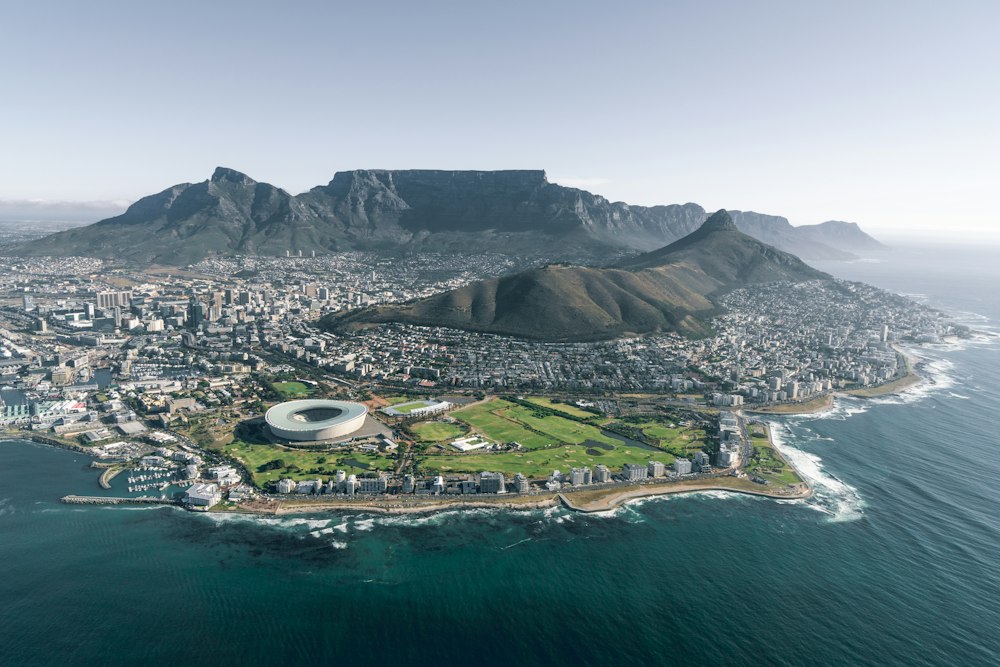
- Visit Table Mountain and explore Cape Town's vibrant food scene
- Tour the Winelands of Stellenbosch and Franschhoek
- Experience the cultural history at Robben Island and Apartheid Museum
Entry and travel documents
Requirements depend on nationality, passport, residence and transit stops. Check the destination's official immigration or embassy advice. The items below are existing club preparation notes, not a confirmed entry checklist.
- Comprehensive travel insurance with medical evacuation cover (ESSENTIAL)
- Passport with valid visa
- Yellow fever certificate (if arriving from endemic country - strictly enforced)
- Private medical aid/insurance card for hospital access
- Doctor's letter for controlled medications
- Copies of prescriptions with generic drug names
- ER24 (084 124) and Netcare 911 (082 911) numbers saved in phone
- Proof of medical aid/insurance for private hospital admission
Healthcare and emergency contacts
Emergency numbers: 10177 (ambulance) / 112 (from mobile) / 10111 (police)
Call 10177 for public ambulance or 112 from mobile. CRITICAL: Private ambulances are dramatically faster and better-equipped than public - call ER24 (084 124) or Netcare 911 (082 911) directly if you have insurance. Private hospitals may request proof of insurance or a cash deposit before non-emergency treatment. In Johannesburg and Cape Town, go directly to private hospitals if possible: Netcare Milpark (JHB - top trauma centre), Mediclinic Cape Town, Netcare Christiaan Barnard (Cape Town).
South Africa has one of the world's starkest two-tier healthcare systems. The private sector - anchored by hospital groups Netcare, Mediclinic, and Life Healthcare - is genuinely world-class, with modern facilities, short wait times, and internationally trained doctors. Private hospitals in Johannesburg, Cape Town, and Durban rival any Western facility. However, the public sector serves ~84% of the population with only ~48% of total healthcare expenditure - resulting in overcrowding, long waits, staff shortages, and infrastructure challenges, particularly in rural areas and Eastern Cape, Limpopo, and KwaZulu-Natal. South Africa has a high burden of HIV/AIDS (7.7 million people living with HIV - largest programme globally) and TB, which strains public resources. NHI (National Health Insurance) legislation was signed in 2024 to eventually create universal coverage, but implementation is years away. For visitors, private healthcare is the clear choice - English is universally spoken in medical settings. Personal safety should be considered when travelling to/from healthcare facilities, especially at night.
Seeing a Doctor
Walk into any private GP practice - no registration or referral needed. Many shopping centres have GP practices. Dis-Chem and Clicks pharmacies have walk-in clinics for minor issues. Public clinics (community health centres) are free but have long waits and are designed for residents.
Recorded cost reference: Private GP: R500-1,200 ($27-66) per consultation. Specialist: R1,000-3,000+ ($55-165+). Dis-Chem/Clicks walk-in clinic: R350-600 ($19-33). Dental: R500-1,500.
Pharmacies and medication
Medications reasonably priced at private pharmacies. Generic substitution is common and pharmacists are legally required to offer generics (unless doctor specifies otherwise). Chronic medication programmes through medical aids reduce costs for insured residents. Dis-Chem and Clicks pharmacies are well-stocked with knowledgeable pharmacists. ARVs (antiretrovirals) available free through public sector. Some medications cheaper than US/Europe.
Practical tips
- Use private healthcare - Netcare, Mediclinic, and Life Healthcare groups are reliable and English-speaking throughout
- Save ER24 (084 124) and Netcare 911 (082 911) in your phone - private ambulances are dramatically better than public
- Travel insurance with medical evacuation cover is ESSENTIAL - air evacuation from remote areas costs R50,000-200,000+
- Take malaria prophylaxis (Malarone or doxycycline) if visiting Kruger/Limpopo/Mpumalanga - start before arrival
- Dis-Chem pharmacies have walk-in clinics for minor issues - affordable (R350-600) and convenient in shopping centres
- Apply sunscreen aggressively - South African UV levels are extremely high, especially at altitude (Johannesburg is 1,750m)
- For Kruger/safari: carry a basic first aid kit, know the nearest hospital, and ensure your insurance covers remote areas
- Discovery Health app (if you have Discovery medical aid) provides facility finder, claims, and virtual GP consultations
Source references
These are source names recorded in the existing profile, not independently checked links or proof of a recent review.
- SA National Department of Health
- WHO South Africa
- Discovery Health 2024
- CDC Travelers Health South Africa 2025
- Council for Medical Schemes
- NICD (National Institute for Communicable Diseases)